Our Societies
The Foundation of Village Awakening and Community Transformation
A Sarvodaya Shramadana Society is a village-level community-based organisation and grassroots institutional platform established to connect and organise the people of a village towards collective awakening and sustainable transformation, guided by the philosophy and values of Sarvodaya.
It is the primary mechanism through which the Sarvodaya community development model is rooted and practised at the grassroots level. The Society provides a structured platform where community members come together to understand their needs, recognise their strengths, develop local leadership, mobilise available resources, and collectively work towards the social, economic, cultural, and environmental wellbeing of their community.
A Sarvodaya Shramadana Society is more than an organisation formed to implement activities or projects. It is a living community institution where people discover their collective potential, build relationships, strengthen cooperation, and take responsibility for shaping the future of their village
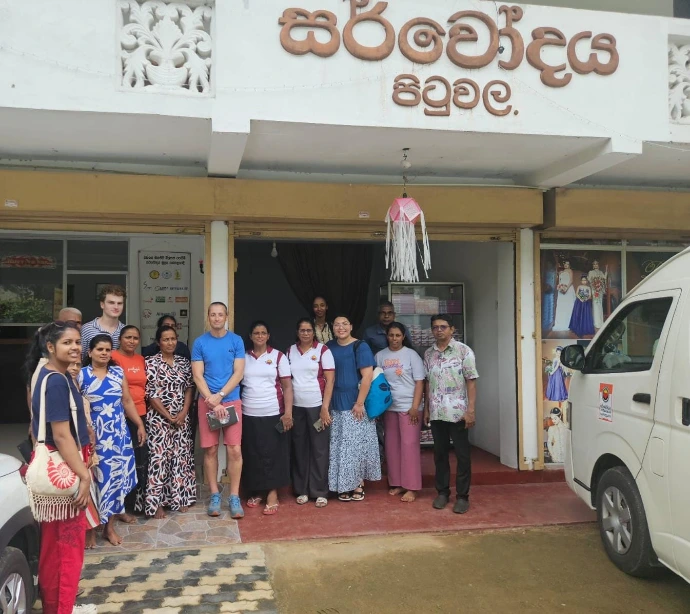
Inclusive Participation and Community Governance
One of the distinctive characteristics of a Sarvodaya Shramadana Society is its inclusive and participatory nature, where all sections of the village community are recognised as valuable contributors to the development journey.
The Society brings together the aspirations of children, the energy and creativity of youth, the leadership and contribution of women, the wisdom and experience of elders, and the commitment of all community members. By creating space for every group within the village, the Society ensures that development is built upon the collective strength and diversity of the entire community.
The Society functions through a democratically established 25-member Executive Committee, representing different segments of the village community:
- 3 representatives from Children’s Groups
- 3 representatives from Youth Groups
- 3 representatives from Mothers’ Groups
- 9 ordinary community members
- 7 elder members
This unique governance structure reflects the Sarvodaya belief that sustainable development emerges when people participate actively, share responsibility, and collectively make decisions that affect their own lives and community.
Through this model, development is not something created for the community, but something created with and by the community.

Community Ownership – The Foundation of Transformation
The Sarvodaya approach begins by enabling communities to understand their own needs, recognise their inherent potential, and mobilise their collective strengths to create meaningful and sustainable solutions.
Every village possesses valuable resources within itself — its knowledge, skills, leadership, relationships, creativity, time, labour, and local resources. These become the foundation upon which communities build their own development pathway.
External knowledge, partnerships, expertise, and resources are connected where necessary to strengthen this journey. However, the foundation of transformation remains rooted in community ownership, active participation, and local leadership.
Every individual has a valuable role to play. The aspirations of children, the energy and creativity of youth, the leadership and contribution of women, the wisdom of elders, and the commitment of every community member together become essential elements of collective progress.
Through this process, communities develop the confidence and capacity to understand challenges, make decisions, take action, and shape their own future.
Shramadana – The Foundation of Collective Action
The identity of every Sarvodaya Shramadana Society is deeply connected to Shramadana — the voluntary sharing of time, thoughts, labour, knowledge, skills, and resources for the common good.
Shramadana is not limited to physical labour. It is a process of community awakening where people come together, recognise their shared responsibilities, identify their strengths, discover local leadership, and build confidence in their ability to create positive change.
Through Shramadana, individuals move beyond personal efforts and experience the power of collective action. The contribution of one person strengthens another, and the combined efforts of many create opportunities that cannot be achieved individually.
This spirit of sharing becomes the foundation for trust, cooperation, responsibility, and long-term community resilience.
The Sarvodaya Village Transformation Journey
The development of a Sarvodaya Shramadana Society is a gradual journey through which a village builds its capacity for self-reliance and sustainable development.
Through Sarvodaya’s five-stage village graduation process, communities progress through a structured pathway of awakening, organisation, empowerment, and transformation.
The journey begins with understanding the community, identifying needs, recognising existing strengths, and initiating collective action through Shramadana.
As the village develops, community institutions and leadership structures are strengthened through the active participation of:
- Children’s Groups
- Youth Groups
- Mothers’ Groups
- Farmers’ Groups
- Other community-based groups
These groups create opportunities for wider participation and ensure that different sections of the community contribute to the village development process.
As capacity grows, communities move towards addressing basic human needs, strengthening livelihoods, promoting economic empowerment, and creating sustainable systems that enable continued progress.
Towards Gram Swaraj – Empowered Village Self-Governance
The ultimate aspiration of a Sarvodaya Shramadana Society is to guide communities towards Gram Swaraj – empowered village self-governance.
Gram Swaraj represents a village where people possess the confidence, knowledge, capacity, and responsibility to participate actively in decisions affecting their own lives and future.
It is not simply a condition of economic advancement. It represents the ability of communities to understand, decide, act, and manage their own development while caring for social harmony, environmental sustainability, and collective wellbeing.
An empowered village does not only strengthen itself; it becomes a source of learning, inspiration, and support for neighbouring communities.
The Sarvodaya Philosophy of Awakening
The work of Sarvodaya Shramadana Societies is guided by the philosophy of “Sarvodaya – the awakening of all.”
Sarvodaya recognises that true development extends beyond material progress and embraces the holistic development of individuals and communities.
The awakening process takes place through interconnected dimensions:
Six Dimensions of Awakening
Spiritual Awakening – nurturing compassion, mindfulness, and inner values.
Moral Awakening – strengthening responsibility, integrity, and ethical living.
Cultural Awakening – respecting identity, traditions, and diversity.
Social Awakening – promoting harmony, equality, and cooperation.
Economic Awakening – building self-reliance, livelihoods, and resilience.
Political Awakening – encouraging participation and responsible citizenship.
These dimensions reflect Sarvodaya’s understanding that sustainable community development requires the growth of the whole person and the whole community.
A Living Institution Built by People
A Sarvodaya Shramadana Society is not merely a village organisation. It is a living institution created through people’s collective strength, strengthened through relationships, and sustained through shared responsibility.
It is where leadership emerges, cooperation grows, communities discover their potential, and self-reliance takes root.
Every Society carries a story of people coming together — children, youth, women, elders, and community members working side by side to create a better future.
Through thousands of such communities working together, the vision of “Sarvodaya – the awakening of all” continues to grow, contributing towards stronger villages, an empowered society, and the broader journey from Gram Swaraj to Deshodaya.